

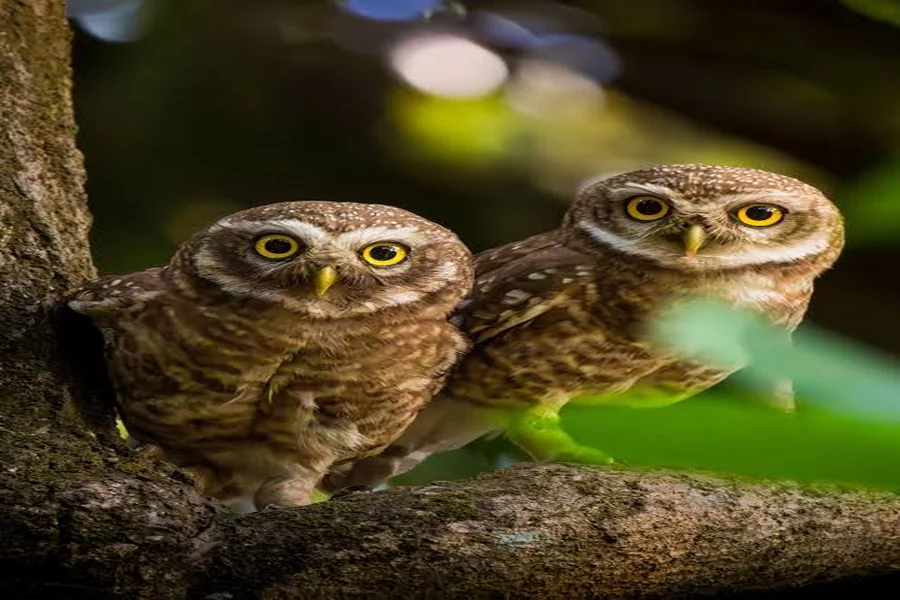

The Quiet World of Forest Owls
Owls sitting in forest environments are a peaceful sight, especially when they remain motionless on a branch while watching everything around them. These remarkable birds are often associated with nighttime, silence, and mysterious woodland scenes. Yet beneath their calm appearance is a highly specialized predator with excellent hearing, sharp vision, powerful talons, and adaptations designed for hunting in low light.
Forests provide owls with many of the resources they need. Tall trees offer places to perch, nest, and hide, while fallen leaves, vegetation, and tree cavities can provide habitat for the small animals they hunt. Different owl species prefer different environments, ranging from dense forests to open woodland and forest edges.
An owl may spend a considerable amount of time sitting quietly on a branch. This behavior is not simply resting. A stationary perch gives the bird an excellent position from which to observe its surroundings, listen for prey, and conserve energy between hunting attempts.
For people interested in birds and wildlife, natureanimalhub offers another place to learn about animals, natural habitats, and the fascinating behaviors that make different species unique.
Why Owls Spend Time Sitting on Branches
An owl sitting quietly in a tree may appear inactive, but it is often highly alert. Perching allows an owl to survey its surroundings without using much energy. From an elevated position, it can monitor movement on the forest floor and listen for sounds coming from beneath leaves or vegetation.
Perching is particularly important because many owls hunt from a stationary position. Instead of continuously flying around looking for food, an owl can wait patiently for an opportunity. When it detects prey, it can launch from the branch and fly toward the target.
A good perch also provides protection. Branches can conceal an owl from other animals and give it a place to rest during daylight hours. Many owl species are most active at night, so finding a secure daytime resting location is essential.
The height of a perch can vary according to habitat and species. An owl may sit on a high branch, a lower tree limb, or another elevated location where it has a useful view of the surrounding area.
This quiet strategy is one of the reasons owls can be difficult to spot. They may remain completely still while their eyes and ears continue gathering information about the forest.
Amazing Owl Adaptations for Forest Life
Owls have several physical adaptations that make them successful woodland hunters. Their large forward-facing eyes provide excellent binocular vision, allowing them to judge distances when targeting prey.
Their eyes are especially useful in low-light conditions. Although owls cannot see in complete darkness, many species have highly sensitive vision that helps them operate effectively when there is limited light.
Hearing is equally important. Owls have specialized facial feathers that help direct sound toward their ears. Some species also have asymmetrically positioned ear openings, which can help them determine where a sound is coming from.
This ability is extremely useful in forests. Leaves, branches, and darkness can make visual hunting difficult, but an owl may detect a small animal through its movement or sound.
Their feet are also highly specialized. Strong talons allow owls to capture and hold prey securely. Once an owl has identified a target, it can descend rapidly from its perch and use its feet to seize the animal.
Another remarkable adaptation is silent flight. Specialized feather structures reduce the sound created by moving air across the wings. This allows many owls to approach prey with surprisingly little noise.
Together, these features make owls efficient predators even when the forest becomes dark and visibility is limited.
How Owls Hunt From the Forest Canopy
Many owls use a sit-and-wait hunting strategy. They select a suitable perch and remain there while listening and watching for prey. Patience is a major part of this approach.
Small mammals are important prey for many owl species. Depending on the species and habitat, owls may also eat insects, reptiles, amphibians, fish, or other birds.
When an owl detects potential prey, its behavior can change quickly. The bird may turn its head, focus its eyes, adjust its position, and prepare for flight. It can then launch from the branch and move toward the target.
The flight may appear almost effortless. Powerful wings provide lift, while the owl’s specialized feathers help keep the approach quiet. Strong talons are extended at the right moment to capture the prey.
Not every hunting attempt succeeds. Prey animals can detect danger, hide under vegetation, or escape quickly. Owls therefore need patience and efficient use of energy.
After a successful hunt, the owl may return to a perch to consume its meal or carry food to a mate or young. Some species produce pellets containing indigestible materials such as bones and fur, which they later regurgitate.
These pellets can provide valuable information to researchers because examining them can reveal what an owl has been eating.
Camouflage and Staying Hidden
One of the most useful features of many forest owls is their ability to blend into their surroundings. Their feathers may contain browns, grays, whites, or other patterns that resemble tree bark, leaves, and shadows.
Camouflage is particularly effective when an owl remains still. A bird that flies through the forest is easy to notice, but an owl sitting motionless against a tree trunk may become surprisingly difficult to see.
Some owls also have markings that break up the outline of their bodies. This can make it harder for predators or other animals to recognize them as birds.
Their behavior works together with their appearance. Remaining quiet and motionless during the day can help an owl avoid unnecessary attention.
This is one reason birdwatchers often need patience when searching for owls. Looking only for movement may not be enough. Careful observers may need to examine branches, tree cavities, and shaded areas to identify a camouflaged bird.
The combination of stillness, feather patterns, and natural forest surroundings creates an effective form of concealment.
Forest Habitats and Owl Survival
A healthy forest provides more than trees. It contains insects, rodents, small mammals, reptiles, amphibians, and other organisms that form a complex food web. Owls depend on these communities for food.
Trees are also important for nesting and shelter. Some owls use natural tree cavities, while others may use abandoned nests or other suitable structures. Large, mature trees can therefore be particularly valuable to woodland birds.
Forest edges can also be important. These areas where woodland meets open land may contain abundant prey and provide different hunting opportunities.
However, habitat loss can create serious challenges for owls. When forests are cleared or fragmented, birds may lose nesting locations, hunting grounds, and safe routes between habitats.
Human development can also introduce additional disturbances. Roads, buildings, artificial lighting, and noise can change the natural conditions of woodland environments.
Protecting forests therefore benefits owls as well as many other species. Maintaining mature trees, preserving connected habitats, and protecting natural vegetation can provide wildlife with essential resources.
The Role of Owls in the Ecosystem
Owls play an important role as predators within many ecosystems. By feeding on small mammals, insects, and other animals, they participate in regulating populations and maintaining food-web relationships.
For example, rodents can reproduce quickly under favorable conditions. Predators such as owls can help keep their populations within the broader balance of the ecosystem.
Owls are also part of a larger network of predators and prey. They compete with other hunters for food while also serving as potential prey for larger animals, particularly when they are young.
Their presence can therefore tell us something about the surrounding environment. A healthy owl population generally requires suitable habitat, adequate prey, and appropriate nesting or roosting locations.
Researchers and bird enthusiasts can learn a great deal by observing where owls are found, what they eat, and how they respond to environmental changes.
The quiet presence of an owl on a branch may therefore represent an important part of a much larger ecological system.
Observing Owls Responsibly
Seeing an owl in its natural habitat can be an exciting experience. However, wildlife observation should always be respectful. Approaching too closely, making loud noises, shining bright lights, or repeatedly disturbing a bird can cause unnecessary stress.
Owls that are resting during the day especially need undisturbed periods. Birdwatchers should maintain a reasonable distance and use binoculars or suitable cameras rather than attempting to get extremely close.
Avoiding disturbances around nests is particularly important. Adult birds may become stressed if people repeatedly approach their young or nesting sites.
Responsible observation allows people to enjoy wildlife without interfering with natural behavior. It also helps preserve good habitats for future generations of birds and wildlife enthusiasts.
Learning to recognize owl calls, preferred habitats, and typical behaviors can make observation more rewarding without requiring close physical contact.
Final Thought
Owls sitting in forest habitats represent one of nature’s most fascinating examples of quiet survival. A motionless bird on a branch may appear peaceful, but it is often carefully listening, watching, resting, or preparing for its next hunt.
Their excellent hearing, sensitive eyesight, powerful talons, silent flight, and natural camouflage allow them to thrive in woodland environments. Forests provide the trees, shelter, prey, and nesting opportunities these remarkable birds need.
Protecting forests and reducing unnecessary disturbance can help preserve suitable habitats for owls and many other species. When people take time to observe these birds respectfully, they can better appreciate the hidden activity taking place throughout the woodland.
The next time an owl is spotted sitting quietly among the trees, its stillness can be understood in a new way. Behind that calm appearance is a highly adapted hunter that plays an important role in the living forest.
FAQs
Why do owls sit on tree branches?
Owls sit on branches to rest, stay concealed, watch their surroundings, and wait for opportunities to detect and capture prey.
Are owls active during the day?
Many owl species are primarily nocturnal, but some can be active during daylight depending on their species, habitat, and circumstances.
How do owls find prey in the dark?
Owls use their sensitive vision and excellent hearing to locate prey when light levels are low.
Why can owls fly so quietly?
Specialized feather structures help reduce the noise produced by air moving across their wings, allowing many owls to approach prey quietly.
What do forest owls eat?
Depending on the species, forest owls may eat rodents, insects, small mammals, reptiles, amphibians, fish, or other birds.
How do owls hide in forests?
Many owls have feather colors and patterns that resemble tree bark, leaves, and shadows, while remaining still helps them avoid detection.
Where do owls build their nests?
Different owl species use different nesting sites, including tree cavities, abandoned nests, cliffs, and other suitable natural or artificial structures.
Why are owls important to forests?
Owls are predators that help regulate populations of prey species and contribute to the balance of forest food webs.
