

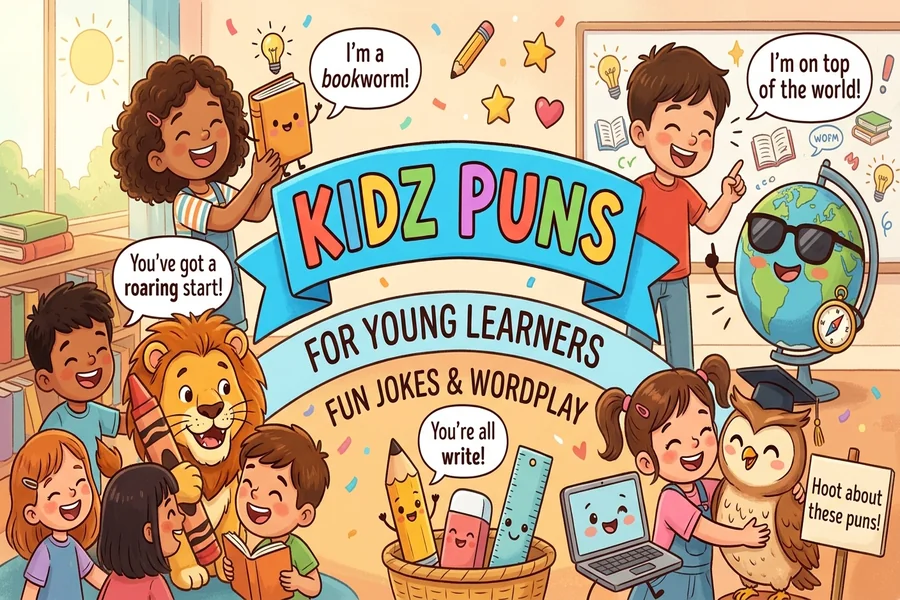

Learning becomes more exciting when children can laugh, play, and use their imagination. Kidz Puns for Young Learners offer a fun way to introduce wordplay, encourage creative thinking, and make everyday conversations more enjoyable. From silly animal jokes to clever classroom expressions, these playful lines help children recognize different word meanings while building confidence in their communication skills. Whether used at home, in preschool, or during elementary lessons, puns can turn simple learning activities into memorable experiences.
Young children naturally enjoy surprising words and funny expressions. A familiar word can become hilarious when it appears in an unexpected situation. For example, a joke about a sleepy pencil or a clever cat can capture a child’s attention while encouraging curiosity about language. These little moments of humor can make reading, writing, and speaking feel less like work and more like play.
Parents and educators seeking fresh inspiration can visit kidzpuns for playful jokes and word combinations suitable for children. Incorporating age-appropriate puns into daily routines can create opportunities for laughter, conversation, and language practice without making learning feel complicated.
Why Puns Help Young Children Learn
Puns introduce children to the playful side of language. Many jokes rely on words that sound alike or have more than one meaning. When children recognize these connections, they begin to understand how language can communicate ideas in different ways.
Consider the joke, “Why did the math book look sad? It had too many problems!” Young learners may first think about difficult situations before realizing that the word “problems” also refers to math exercises. This simple connection encourages children to think carefully about meaning.
Wordplay can also support vocabulary development and listening skills. Children learn to pay attention to sounds, notice patterns, and ask questions about unfamiliar expressions. Parents and teachers can encourage this process by explaining jokes in simple language and inviting children to suggest their own punchlines.
Puns are most effective when they match a child’s age and understanding. Younger learners usually benefit from short, familiar jokes, while older children may enjoy more complicated word combinations.
Funny Kidz Puns for Young Learners
Simple jokes about everyday objects are an excellent starting point for children who are learning to understand wordplay. These original examples are easy to remember and share.
- Pencil: My pencil is always ready because it likes to make a point.
- Book: The book was so popular that everyone wanted to check it out.
- Clock: The clock was tired because it had been working around the clock.
- School: My classroom is so bright that even the ideas need sunglasses.
- Shoes: My shoes love adventures because they are always going places.
- Computer: My computer wanted a snack, so I gave it a few cookies.
- Cookie: The cookie was a clever student because it was one smart cookie.
- Bicycle: My bicycle is a good friend because it always stands by me.
- Music: The guitar was excited because it had a string of good ideas.
- Rain: The raindrop became famous because it made a big splash.
Adults can read these jokes aloud and ask children to explain what makes each one funny. This turns joke time into an informal learning activity while keeping the atmosphere relaxed and enjoyable.
Animal and Food Puns Children Will Love
Animals and food are familiar subjects that offer endless opportunities for funny expressions. Children often find these jokes especially entertaining because they can imagine the situations in their minds.
Animal puns
- The owl became a teacher because it was a know-it-owl.
- The dog became a detective because it always sniffed out the truth.
- The cat joined a band because it had purr-fect rhythm.
- The bee started a business because it had a lot of buzz-ness.
- The cow became a comedian because everyone thought it was amoosing.
Food puns
- The banana went to the doctor because it wasn’t peeling well.
- The pizza wanted to share its feelings because it had a lot on its plate.
- The orange felt cheerful because it knew how to look on the bright side.
- The egg became a comedian because it always cracked people up.
- The potato felt confident because it knew it was a real sweet potato.
Parents can use these jokes during meals, while reading picture books, or during playtime. Teachers can also ask students to draw the animal or food item mentioned in each joke and write the punchline beneath the picture.
Fun Ways to Teach Wordplay at Home and School
Puns become even more engaging when children participate instead of simply listening. A simple word game can help young learners experiment with vocabulary and develop confidence in expressing their ideas.
One easy activity is the word-of-the-day challenge. Choose a familiar word, such as “star,” “light,” or “cake,” and invite children to create a funny sentence using it. They can work individually, with classmates, or alongside family members.
Another activity involves matching jokes with pictures. Show children an illustration of a cat, banana, pencil, or bicycle and ask them to choose an appropriate pun. This approach works particularly well for children who benefit from visual learning.
Teachers can also place a joke on the classroom board each morning. Students can discuss its meaning, identify the wordplay, and suggest alternative punchlines. These exercises encourage listening, speaking, reading, and creative writing in an enjoyable setting.
Adults should remember that the main goal is participation rather than perfection. Some children will invent clever jokes immediately, while others may need examples and encouragement. Every attempt provides an opportunity to practice language and imagination.
Final Thought
Kidz Puns for Young Learners make everyday learning more cheerful by combining humor with language practice. From silly animal jokes to clever school-related expressions, puns encourage children to recognize word meanings, develop vocabulary, and express their creativity. Parents and teachers can make wordplay part of reading time, classroom activities, and family conversations. With patience, encouragement, and plenty of laughter, children can build useful communication skills while discovering just how much fun words can be.
FAQs
What are kidz puns for young learners?
Kidz puns for young learners are simple, child-friendly jokes that use similar-sounding words or different meanings to create humor.
How do puns help children develop language skills?
Puns encourage children to recognize word patterns, understand multiple meanings, expand vocabulary, and practice creative communication.
At what age can children start enjoying puns?
Children can begin enjoying simple wordplay during the preschool years, although their understanding of more complicated puns develops as their language skills grow.
How can teachers use puns in lessons?
Teachers can include puns in vocabulary games, reading exercises, classroom displays, writing activities, and short discussions about word meanings.
What are some easy puns for beginners?
Simple examples include “You’re one smart cookie,” “The banana wasn’t peeling well,” and “The owl is a know-it-owl.”
