

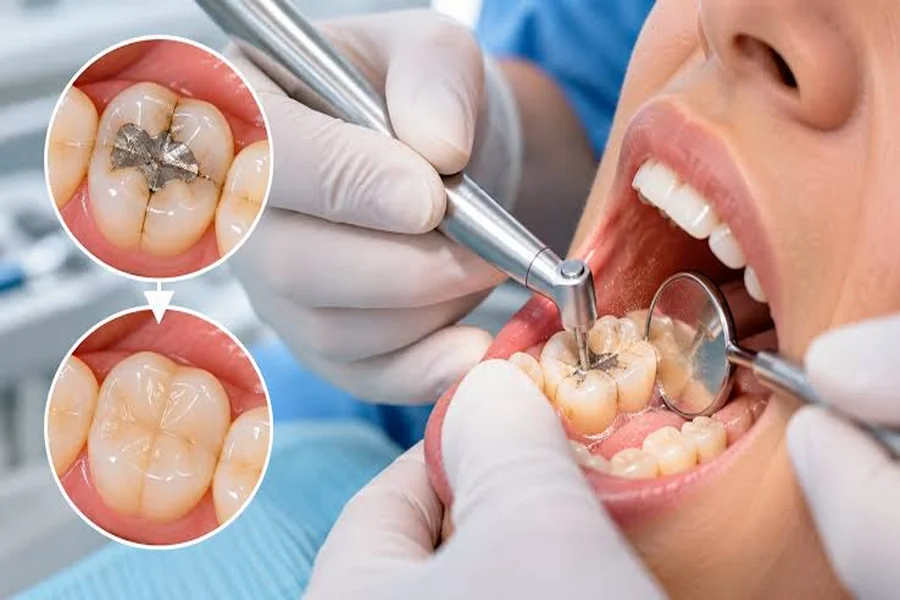

You finally got your braces off, and instead of feeling done, you may be hearing from your dentist in North Phoenix that one or more old fillings should be checked or replaced. That can feel frustrating. You already put time, money, and patience into straightening your teeth, and now there is one more dental decision sitting in front of you.
This concern is common. Braces can make it easier for your dentist or orthodontist to spot worn edges, small leaks around old fillings, or areas that were hard to evaluate before your teeth moved. That does not always mean every filling needs to be redone. It means you need clear answers before you agree to treatment. If you are wondering about replacing fillings after braces come off, the goal is simple. Find out whether the filling is actually failing, whether timing matters, and what choice protects your teeth for the long run.
Old fillings can look different once braces are removed
Teeth shift during orthodontic treatment, and once brackets are gone, your bite changes too. A filling that seemed fine before may now hit differently when you chew. In some cases, the issue is not the filling itself. It is the way your upper and lower teeth meet. In other cases, a filling has rough margins, staining, cracks, or wear that became easier to see after the braces came off.
This is where your first question matters: Is the filling damaged, or does it only look different now? A dark line around a filling can mean leakage, but it can also be stain. A filling that feels high may only need adjustment. According to the National Institute of Dental and Craniofacial Research information on dental fillings, fillings can wear out, chip, or loosen over time, and those changes often guide the need for replacement.
The second question is just as practical: Will replacing this filling help protect the tooth, or is it mainly cosmetic? That answer affects cost, urgency, and the type of material used. If the tooth has decay under the filling, delay can make the repair larger and more expensive. If the issue is cosmetic, you may have more flexibility.
The best time to replace fillings depends on bite, decay, and retention plans
Not every filling should be replaced the same week the braces come off. Your bite may continue settling, especially if you are starting retainers. A dentist may want to wait a short time before redoing a filling that affects your bite, because making changes too early can lead to more adjustments later.
That leads to the third question: Should this filling be replaced now, or after my bite settles? If there is active decay, a crack, pain, or food trapping, waiting may not make sense. If the filling only needs reshaping or the bite is still adjusting, timing may be different.
The fourth question is about materials: What filling material makes sense now that my teeth are aligned? Some patients want tooth colored fillings for front teeth or visible premolars after orthodontic treatment. Others need a stronger option in a back tooth that takes heavy chewing force. Research into dental materials and restoration science continues to improve strength, bonding, and appearance, but no material is perfect for every tooth.
Your fifth question is the one many people forget to ask: What happens if I leave it alone for now? That is the question that turns a vague recommendation into a useful plan. You deserve to know the real risk of waiting. Maybe it is a few months of monitoring. Maybe it is a higher chance of fracture or decay spreading under the old filling. Those are very different situations.
A simple comparison can clarify whether replacing a filling makes sense
| Concern | Monitor for Now | Replace the Filling Soon |
|---|---|---|
| Minor staining at edge | Often reasonable if X rays and exam show no decay | Useful if appearance bothers you or margin is rough |
| Filling feels high after braces | May only need a bite adjustment | Needed if the filling is cracked or poorly shaped |
| Confirmed decay under filling | Usually increases risk of a bigger repair later | Often the safer choice to preserve tooth structure |
| Cracked or leaking filling | Can lead to sensitivity or fracture | Often recommended to seal and protect the tooth |
| No symptoms, stable filling, healthy bite | Regular review may be enough | Usually not urgent unless there is another concern |
If you have sensitivity now, pay attention to the pattern. Brief cold sensitivity can happen after braces or after bite changes. Sharp pain when biting down is different. MedlinePlus explains that toothache and dental pain can come from decay, cracks, irritation, or infection. That is why guessing rarely helps. The same symptom can come from very different causes.
The right questions help you avoid unnecessary dental work
Many people hear “replace the filling” and assume the tooth is in trouble. Sometimes it is. Sometimes the better answer is a small adjustment, a short period of monitoring, or updated X rays at your next visit. This is where a family dentist and orthodontist working together can help. One sees the bite and tooth movement. The other looks closely at the health and structure of the tooth. That team view often leads to a better answer than a rushed decision.
If you have been searching for guidance on replacing dental fillings after braces or trying to understand when filling replacement is actually necessary, focus on function first, then appearance, then timing. That order usually keeps you from doing too much or waiting too long.
Clear next steps make the decision easier
Ask for the reason in plain language. Get a direct answer about whether the filling has decay, a crack, leakage, poor fit, or only cosmetic wear. If the explanation is vague, ask for photos or X rays.
Ask whether a bite adjustment could solve the problem. After braces, a filling may feel wrong because your bite changed. A simple reshaping can sometimes fix the issue without replacing the restoration.
Ask what happens if you wait three to six months. This gives you a timeline and a risk level. If the answer is that waiting could lead to a fracture or deeper decay, you have your answer. If the tooth is stable, monitoring may be reasonable.
Getting braces off should feel like progress, not confusion. If a filling comes up at the same time, slow the conversation down and ask the five questions that matter. A thoughtful plan protects the work you already put into your smile and helps you avoid surprises later. If you need support from a family dentist and orthodontist, schedule an exam and ask for a clear review of any filling that looks questionable after braces.
